Digestive complaints are among the most common reasons people visit a doctor, yet they are also among the most frequently misunderstood. If you live with recurrent bouts of stomach cramping, sudden diarrhea, stubborn constipation, or relentless bloating, you know how disruptive gut problems can be to everyday life.
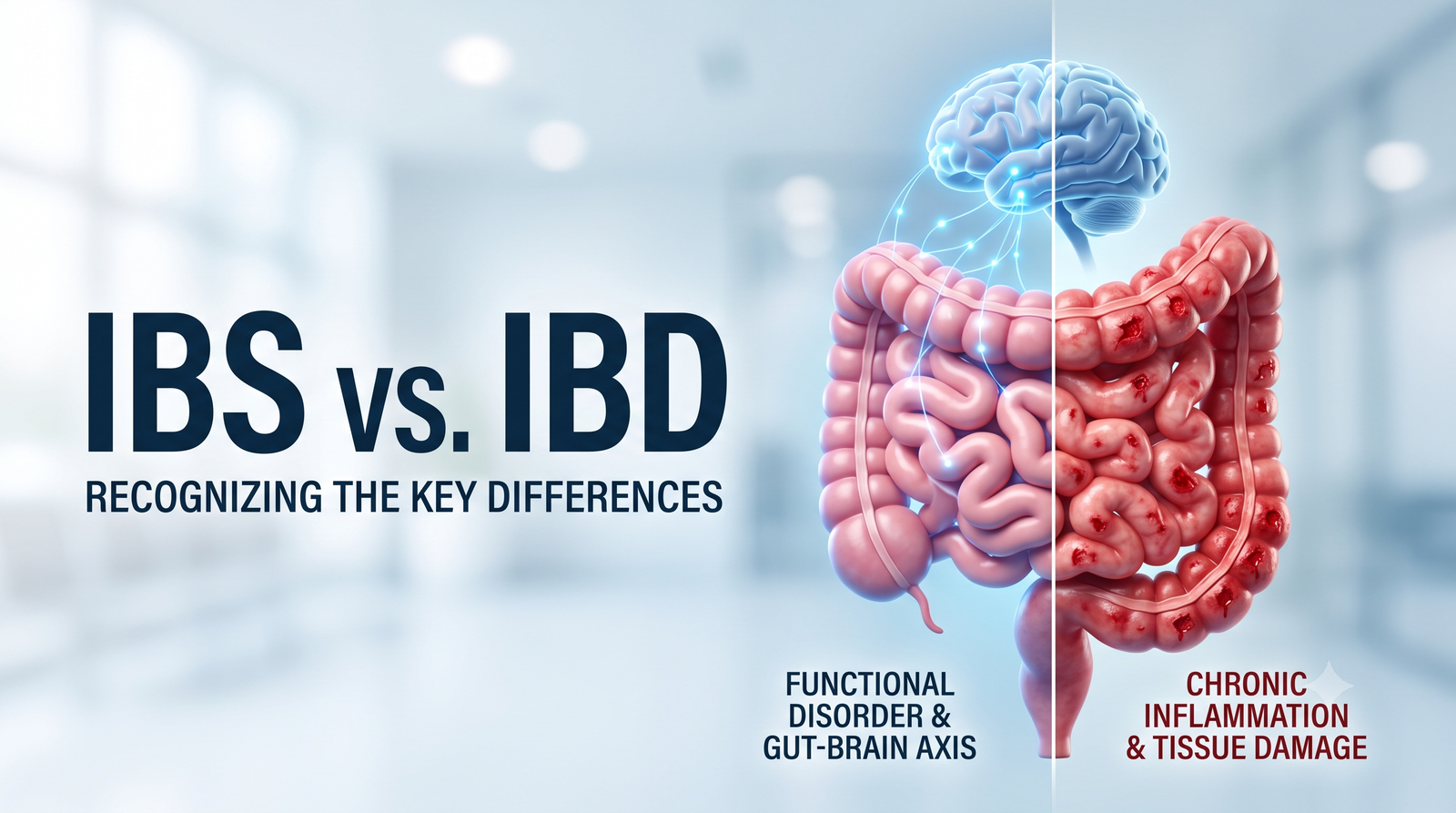
When searching for answers online, two acronyms dominate nearly every digestive health forum: IBS and IBD.Because both conditions share overlapping digestive symptoms—most notably abdominal pain, erratic bowel habits, and gas—they are regularly conflated by patients and sometimes misdiagnosed in primary care settings. It is not uncommon for someone with longstanding gastrointestinal distress to wonder: “Do I just have a sensitive, irritable stomach, or is there an active inflammatory disease damaging my intestines?”Confusing the two is not a minor semantic mix-up. Irritable Bowel Syndrome (IBS) and Inflammatory Bowel Disease (IBD) are fundamentally different conditions. They operate on distinct biological levels, carry vastly different long-term health risks, require completely separate diagnostic workups, and respond to entirely different medical therapies.
| Feature / MetricIBS (Irritable Bowel Syndrome)IBD (Inflammatory Bowel Disease)ClassificationFunctional Gastrointestinal Disorder / Disorder of Gut-Brain Interaction (DGBI)Chronic Autoimmune / Immune-Mediated Inflammatory DiseaseBiological MechanismMiscommunication along the gut-brain axis accompanied by visceral hypersensitivityOveractive immune cells directly attack the mucosal tissue, starting a destructive cascadeStructural FindingsMucosa looks macroscopically healthy; zero visible ulcers, erosions, or bleeding on a colonoscopyVisible tissue damage: ulcerations, deep transmural fissures, erosions, and active bleedingLong-Term Tissue DamageNone; does not cause intestinal scarring, strictures, or increase colon cancer risksHigh risk of structural complications like strictures, fistulas, malnutrition, and colorectal cancer |
|---|
Distinguishing between these two conditions is essential. Treating an autoimmune inflammatory disease with dietary tweaks alone can lead to irreversible bowel damage, while subjecting a patient with functional bowel hypersensitivity to aggressive immunosuppressive medications carries unnecessary risk.
1. What Is IBS (Irritable Bowel Syndrome)?
Irritable Bowel Syndrome is classified medically as a Disorder of Gut-Brain Interaction (DGBI), formerly referred to as a “functional gastrointestinal disorder.”
The word functional here does not mean the pain is imaginary or “all in your head.” Rather, it means that the biological hardware, the physical structure of the intestinal lining, muscles, and blood vessels appears completely intact and normal under high-magnification endoscopy, CT imaging, and routine biopsy. However, the software—the neurological signaling, muscular contractions, and biochemical communication between the central nervous system and the enteric nervous system is misfiring.
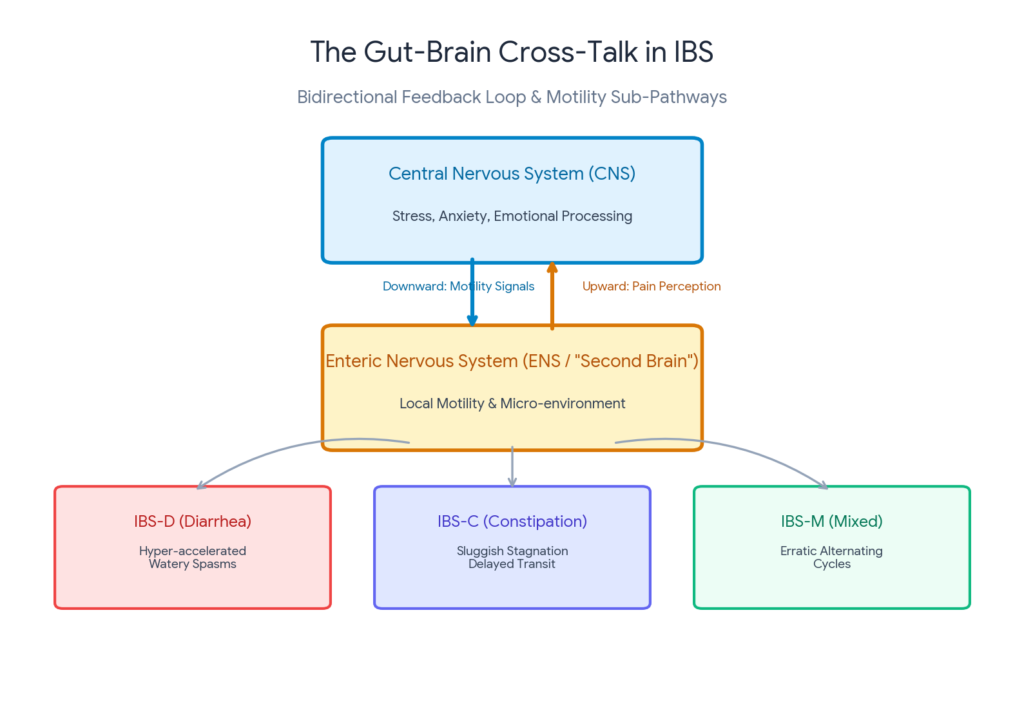
In a healthy individual, normal digestion involves rhythmic, wave-like muscular contractions called peristalsis that propel food, fluids, and waste through the digestive tract. The nerves embedded throughout the gut wall quietly register gas, stretching, and stool movement without alerting the conscious brain.
In someone living with IBS, two primary dysfunctions occur:
- Motility Dysregulation: The smooth muscle layers of the intestine contract either too forcefully and rapidly (causing sudden, loose stools and painful spasms) or too sluggishly (causing dry, hard stools and severe straining).
- Visceral Hypersensitivity: The sensory nerves innervating the bowel wall have a markedly lowered pain threshold. Normal amounts of gas, mild stretching, or routine digestion that an average person wouldn’t feel are amplified by the nervous system into intense, sharp, or cramping pain.
The Subtypes of IBS
Because IBS manifests differently from person to person, modern gastroenterology categorizes the condition into four distinct clinical subtypes based on the predominant stool pattern on symptomatic days:
| Subtype | Medical Name | Characteristic Stool Pattern | Clinical Context |
|---|---|---|---|
| IBS-D | Diarrhea-Predominant IBS | > 25% of stools are loose or watery; < 25% are hard or lumpy. | Associated with rapid gut transit, intestinal cramping, and sudden bowel urgency. |
| IBS-C | Constipation-Predominant IBS | > 25% of stools are hard or lumpy; < 25% are loose or watery. | Linked to delayed intestinal transit, straining, bloating, and infrequent evacuations. |
| IBS-M | Mixed / Alternating IBS | > 25% of stools are loose or watery; AND > 25% are hard or lumpy. | Characterized by highly unpredictable bowel habits fluctuating between both extremes. |
| IBS-U | Unclassified IBS | Diagnostic symptoms meet the baseline criteria for IBS, but stool patterns do not fit the D, C, or M criteria. | Often seen in patients whose symptoms change frequently or who keep highly stable stool consistency despite pain. |
What Drives IBS?
While the exact catalyst varies, research points to several underlying drivers:
- Post-Infectious IBS (PI-IBS): Developing chronic IBS symptoms following a bout of acute food poisoning or severe gastroenteritis (Campylobacter, Salmonella, Shigella). Even after the pathogen clears, low-grade mucosal immune activation and altered gut-barrier permeability persist.
- Microbiome Alterations (Dysbiosis): Imbalances in the composition and metabolic activity of the trillions of microbes populating the colon.
- Small Intestinal Bacterial Overgrowth (SIBO): Upward migration of colonic bacteria into the small intestine, leading to early carbohydrate fermentation and excessive gas.
- Psychosocial Stress: Chronic psychological stress, poor sleep, and anxiety upregulate sympathetic nervous system tone, which directly alters gut motility and heightens visceral pain pathways.
2. What Is IBD (Inflammatory Bowel Disease)?
Inflammatory Bowel Disease is an umbrella term for a group of chronic, progressive, autoimmune-mediated conditions characterized by destructive inflammation of the gastrointestinal tract.
In IBD, the immune system which normally defends the body against harmful viruses and pathogenic bacteria becomes dysregulated. It mounts an attack against the body’s own intestinal lining, driven by an abnormal reaction to environmental triggers, dietary antigens, or resident gut microbes in genetically predisposed individuals.
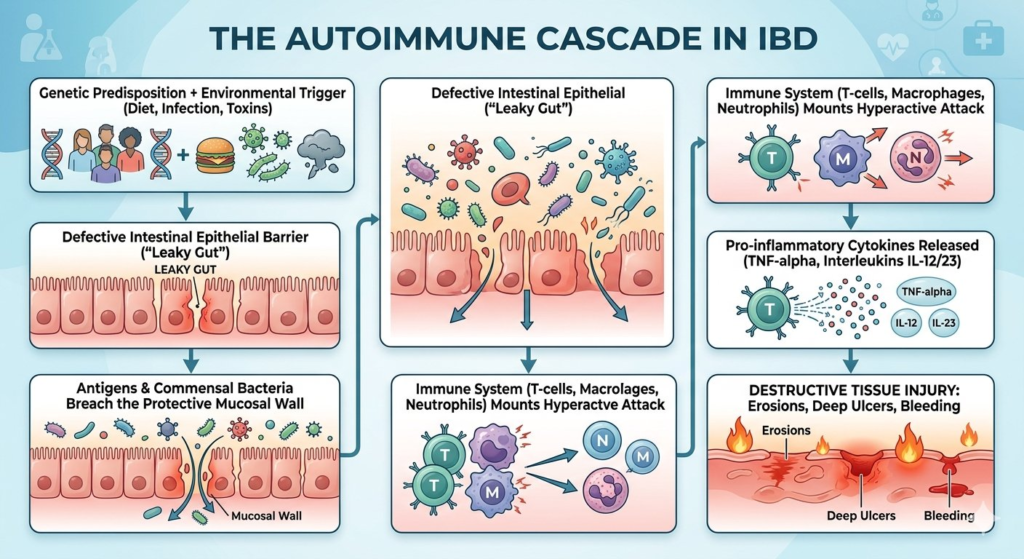
Unlike IBS, IBD causes measurable, structural destruction of the digestive tract. When examined under an endoscope or light microscope, the delicate pink lining of the intestine shows clear pathology: raw ulcers, mucosal swelling, micro-abscesses, spontaneous capillary bleeding, and dense clusters of inflammatory cells.
IBD is comprised of two major chronic disorders: Ulcerative Colitis (UC) and Crohn’s Disease (CD).
Ulcerative Colitis: The Mucosal Disease of the Large Bowel
In Ulcerative Colitis, the chronic inflammatory response is confined exclusively to the large intestine (the colon and rectum).
- Continuous Pattern: Ulcerative Colitis always begins in the rectum (proctitis) and advances upward into the sigmoid colon, descending colon, and sometimes the entire large bowel (pancolitis) in an uninterrupted, symmetrical sheet.
- Depth of Tissue Injury: The inflammation in UC is generally superficial, targeting the inner mucosal and submucosal layers. It causes the lining to become friable (bleeding easily when touched), studded with tiny bleeding ulcers and micro-abscesses.
- Common Symptoms: Frequent, urgent, small-volume bowel movements mixed with visible red blood, mucus, and pus, accompanied by painful rectal spasms called tenesmus (the constant sensation of needing to pass stool even when the bowel is completely empty).
Crohn’s Disease: The Transmural Chameleon
Crohn’s Disease is more variable and structurally destructive.
- Anatomical Scope: Crohn’s can manifest in any segment of the gastrointestinal tract, from the mouth to the perianal area. In about 50% of patients, it affects the terminal ileum (the final portion of the small intestine) and the beginning of the colon (ileocolitis).
- Skip Lesions: Unlike the uniform spread of UC, Crohn’s appears in patchy “skip lesions.” A patient may have two inches of severely inflamed tissue, followed by eight inches of completely normal intestine, followed by another patch of ulceration.
- Transmural Depth: Inflammation in Crohn’s is transmural, meaning it cuts through all four layers of the intestinal wall—mucosa, submucosa, muscularis propria, and serosa.
- Structural Complications: Because the inflammation penetrates deeply, the body deposits dense scar tissue as it tries to heal. This leads to strictures (severe narrowing of the intestinal tunnel that can cause bowel obstructions) and fistulas (abnormal tunnels that burrow entirely through the bowel wall into adjacent loops of intestine, the bladder, the vagina, or the perianal skin).
3. IBS vs. IBD: The Comprehensive Comparison
To understand how these two conditions diverge across everyday symptoms, anatomy, testing, and clinical prognosis, review the side-by-side diagnostic comparison below:
Clinical DomainIrritable Bowel Syndrome (IBS)Inflammatory Bowel Disease (IBD: UC & Crohn’s)Pathological NatureFunctional / Neuromuscular; chronic disruption or misfiring of the gut-brain axis.Chronic Autoimmune / Immune-mediated, progressive inflammatory destruction.Structural FindingsNormal endoscopic appearance; intact mucosal barrier and healthy cellular walls.Visible macroscopic damage; deep ulcers, architectural erosions, friable mucosa, and bleeding.Presence of BloodRare (unless arising from localized, external hemorrhoids or superficial fissures).Highly common (presents as frank bright red blood or dark, altered blood mixed in the stool).Nocturnal SymptomsRare; the central nervous system down-regulates functional bowel spasms during sleep.Frequent; ongoing active inflammation wakes patients from a sound sleep to pass urgent diarrhea.Systemic SignsAbsent; does not cause chronic low-grade fevers, rapid involuntary weight loss, or cachexia.Common; recurrent low-grade fevers, unintended weight loss, growth failure in children, and fatigue.Inflammatory MarkersNormal; Fecal Calprotectin < 50 mcg/g and standard blood C-Reactive Protein (CRP) are baseline.Markedly elevated; Fecal Calprotectin often > 250–1000+ mcg/g; blood CRP and ESR are spiked.Extra-Intestinal SignsSomatic overlays: Fibromyalgia, chronic fatigue syndrome, TMJ, migraines, or interstitial cystitis.Inflammatory overlays: Peripheral or axial arthritis, uveitis/episcleritis, erythema nodosum, or pyoderma.Cancer RiskNo increased risk of developing colorectal or intestinal malignancies.Elevated colorectal cancer risk; correlates with disease duration and severity (typically after 8–10 years).Surgical InterventionNever indicated or useful; there is no localized structural anatomy to surgically remove.Often required over time to manage severe strictures, complex fistulas, perforations, or refractory colitis. |
|---|
4. Recognizing the Key Differences: A Symptom-by-Symptom Breakdown
While both disorders present with abdominal distress, their day-to-day symptom profiles have distinct characteristics when examined closely.
1. Pain Characteristics & Relation to Defecation
- In IBS: The pain is typically spasmodic or cramping, centered in the lower abdomen or across the left flank. A hallmark of IBS is that pain often improves or changes following a bowel movement. Bloating typically builds progressively throughout the afternoon and evening as food ferments, but eases overnight while sleeping.
- In IBD: Abdominal pain tends to be persistent, inflammatory, and constant. In Crohn’s disease affecting the terminal ileum, pain is commonly localized to the Right Lower Quadrant (RLQ), closely mimicking acute appendicitis. Emptying the bowels does not clear the deep inflammatory discomfort.
2. The Presence of Blood in the Stool
- In IBS: True gastrointestinal bleeding is not a feature of IBS. If someone with IBS notices a trace of bright red blood on toilet paper, it is almost universally secondary to an external mechanical issue: hard constipation stools causing an anal fissure, or excessive wiping irritating external hemorrhoids. Blood is never mixed directly into loose IBS stool.
- In IBD: Visible bleeding is a hallmark sign, particularly in Ulcerative Colitis. Because the colonic mucosa is eroded and ulcerated, stools are frequently mixed with frank red blood, dark clots, mucus, and inflammatory exudate. Passing bloody diarrhea is one of the most common early presentations of UC.
3. The “Night Test” (Nocturnal Symptoms)
One of the most reliable clinical differentiators between functional and organic bowel disease is what happens while the patient is asleep:
- In IBS: The brain’s central processing downregulates gut sensory awareness during deep sleep. As a result, IBS almost never wakes a patient from sound sleep to have a bowel movement or experience abdominal pain.
- In IBD: Active autoimmune inflammation, cytokine release, and fluid exudation continue 24 hours a day. Patients with active IBD are frequently awoken in the middle of the night by severe cramping and an urgent need to pass bloody diarrhea.
4. Systemic Inflammation and Extra-Intestinal Manifestations
Because IBD is a systemic autoimmune condition, its inflammatory markers can travel through the bloodstream and attack tissues outside the digestive tract. Approximately 25% to 40% of IBD patients develop Extra-Intestinal Manifestations (EIMs):
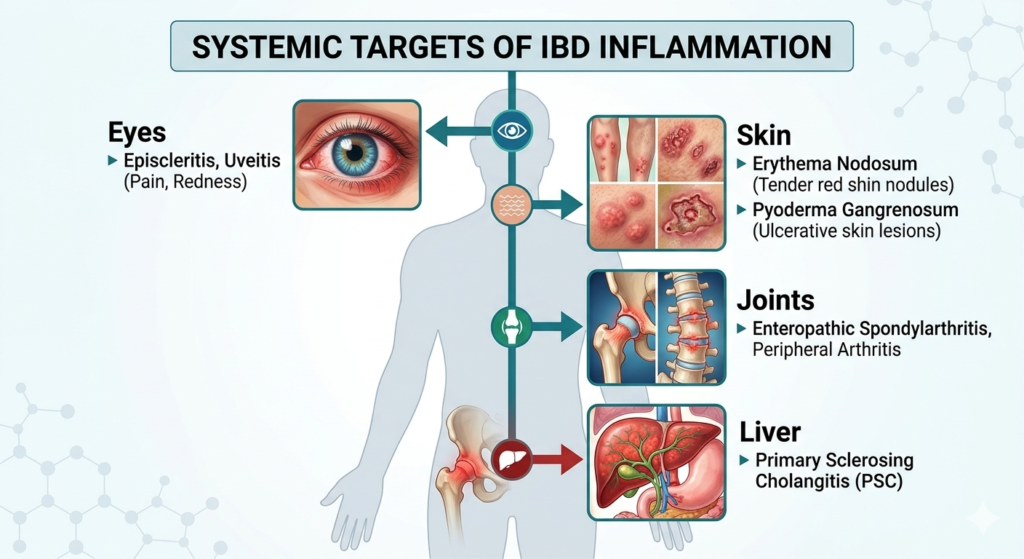
In contrast, while patients with IBS frequently experience non-digestive complaints—such as chronic migraines, fibromyalgia, interstitial cystitis, or temporomandibular joint (TMJ) pain—these represent generalized central nervous system pain sensitivity, not autoimmune tissue destruction.
5. Diagnostic Pathways: How Specialists Differentiate IBS from IBD
A gastroenterologist relies on objective diagnostic tools to differentiate functional bowel issues from autoimmune inflammatory conditions.
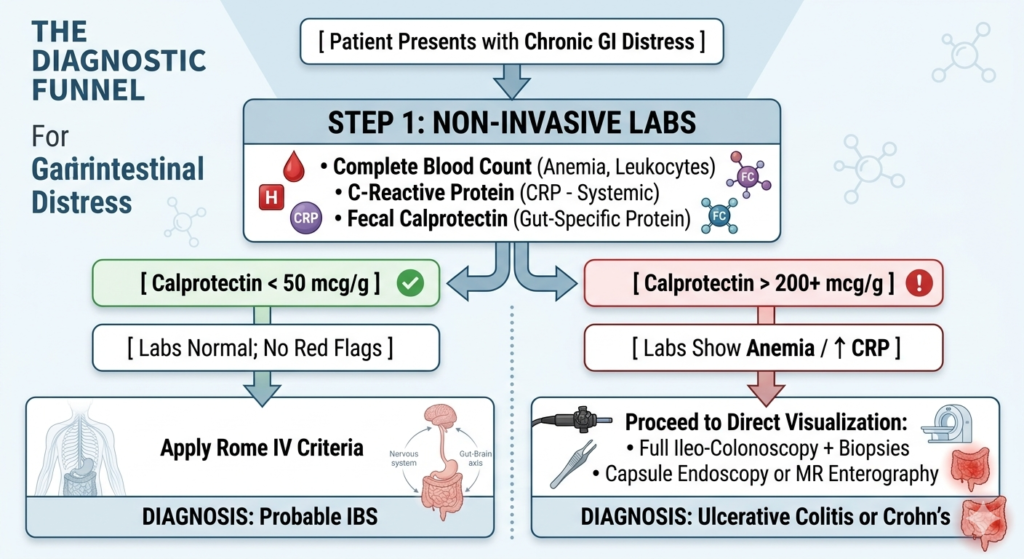
Because there is no single blood test or scan that turns positive for IBS, doctors confirm it using a validated clinical standard called the Rome IV Criteria.
To receive a diagnosis of IBS, a patient must experience:
Recurrent abdominal pain on average at least 1 day per week in the last 3 months, associated with two or more of the following criteria:
- Related to defecation (either increasing or decreasing following a bowel movement).
- Associated with a change in the frequency of stool (passing stools more or less often than usual).
- Associated with a change in the form (appearance) of stool (shifting toward Bristol Stool Scale loose/watery types or hard/lumpy types).
Criteria must be fulfilled for the past 3 months, with symptom onset at least 6 months prior to diagnosis.
The Gold-Standard Stool Biomarker: Fecal Calprotectin
The introduction of the Fecal Calprotectin Test has simplified the process of distinguishing between IBS and IBD.
- What it measures: Calprotectin is a zinc- and calcium-binding protein found inside neutrophils (white blood cells). When the intestinal mucosa is inflamed, ulcerated, or damaged (as in active IBD), neutrophils migrate across the bowel wall and spill into the intestinal lumen, shedding calprotectin directly into the stool.
- Interpretation:
- $< 50\ \mu g/g$: Normal. Indicates absence of significant intestinal inflammation. Strongly supports a diagnosis of IBS rather than IBD.
- $50 – 150\ \mu g/g$: Borderline/Mild. Can occur with mild NSAID irritation, resolving infections, or low-grade inflammation.
- $> 200 – 1000+\ \mu g/g$: Significantly elevated. Indicates active neutrophil migration and mucosal destruction, serving as an objective signal for active IBD that warrants prompt endoscopic investigation.
Endoscopic Visualization: Colonoscopy with Terminal Ileoscopy
A colonoscopy provides direct visualization of the entire mucosal lining of the large intestine and the terminal ileum:
- What IBS looks like: Under high-definition optical imaging, the mucosa of an IBS patient appears smooth, pink, and healthy, with clear vascular patterns. Microscopic biopsies reveal normal crypt architecture without chronic inflammatory infiltration.
- What IBD looks like:
- In UC: Loss of the normal vascular pattern, mucosal friability (spontaneous weeping of blood), continuous patches of ulceration, and inflammatory pseudopolyps.
- In Crohn’s: Deep, longitudinal “cobblestone” ulcers, aphthous erosions, strictured segments, and skip lesions. Microscopic tissue biopsies often reveal non-caseating granulomas—clusters of immune cells that confirm Crohn’s disease.
6. The “Red-Flag” Protocol: When to Seek Immediate Medical Help
Certain warning signs—termed “Alarm Features” in clinical gastroenterology—indicate that symptoms are unlikely to be simple IBS and require prompt medical evaluation:
- Rectal Bleeding: Blood mixed within stools or passing dark, tarry stool.
- Nocturnal Symptoms: Awakening from sleep with diarrhea or cramps.
- Unintentional Weight Loss: Dropping weight rapidly without dieting.
- Persistent Fever: Unexplained daily low-grade or high-grade spikes.
- Late-Onset Symptoms: Developing severe symptoms for the first time after age 45 to 50.
- Family History: A first-degree relative with IBD or colorectal cancer.
- Progressive Anemia: Chronically low hemoglobin and ferritin levels.
- Palpable Abdominal Mass: A distinct physical swelling or lump felt in the abdomen.
7. Medical Management & Treatment Protocols
Because IBS and IBD operate through completely different biological pathways, their treatment regimens are entirely separate.
| Therapeutic Pillar | IBS Treatment Regimen | IBD Treatment Regimen |
|---|---|---|
| Core Clinical Target | Normalize gut motility and calm visceral nerve pain. | Suppress hyperactive immune attack and heal mucosal tissue. |
| First-Line Therapies | Low-FODMAP diet, soluble fiber (Psyllium), and antispasmodics. | Targeted 5-ASAs (Mesalamine) and local oral or topical corticosteroids. |
| Advanced Therapies | Rifaximin (antibiotic for SIBO), secretagogues, and low-dose neuromodulators. | Biologics (Anti-TNF, Anti-Integrins), JAK inhibitors, and systemic immunosuppressants. |
| Role of Surgery | Absolutely none; there is no structural tissue damage to remove. | Indicated when necessary to treat strictures, fistulas, obstructions, or for a colectomy. |
1. Dietary Adjustments (The Low-FODMAP Diet)
FODMAPs (Fermentable Oligosaccharides, Disaccharides, Monosaccharides, and Polyols) are short-chain carbohydrates that absorb poorly in the small intestine. In people with IBS, these molecules draw excess water into the bowel and ferment rapidly upon reaching colonic bacteria, causing painful distension.
A structured, three-phase Low-FODMAP protocol (elimination, reintroduction, and personalization) supervised by a clinical dietitian helps identify specific personal triggers—such as garlic, onions, wheat, or lactose—without overly restricting everyday nutrition.
2. Targeted Medications
- For IBS-D (Diarrhea): Gut-directed antispasmodics (e.g., Mebeverine, Dicyclomine) help relieve intestinal muscle spasms. Peripherally acting opioid receptor agonists (e.g., Loperamide) slow transit time, while a targeted 14-day course of the non-absorbable antibiotic Rifaximin helps clear small intestinal bacterial overgrowth.
- For IBS-C (Constipation): Soluble fiber supplements (such as fine psyllium husk) help draw water into the stool without causing excess fermentation. Osmotic agents (such as Polyethylene Glycol) and specialized intestinal secretagogues (e.g., Linaclotide, Lubiprostone) stimulate chloride and water secretion into the bowel lumen to ease bowel movements.
3. Neuromodulators and Gut-Brain Therapies
Because visceral hypersensitivity is driven by signaling between the brain and the gut, low-dose neuromodulating medications (such as Tricyclic Antidepressants like Amitriptyline, prescribed at lower doses than those used for depression) can help reduce gut pain sensitivity.
Additionally, evidence-based behavioral therapies—such as Gut-Directed Hypnotherapy and Cognitive Behavioral Therapy (CBT)—help calm the autonomic nervous system and reduce visceral pain pathways.
Modern Treatment Approaches for IBD
The management of IBD is driven by objective medical intervention, with the primary clinical target being deep mucosal healing—resolving visible ulcers and normalizing inflammatory biomarkers to prevent long-term complications.
1. Aminosalicylates (5-ASAs)
Medications like Mesalamine and Sulfasalazine serve as the foundation of therapy for mild-to-moderate Ulcerative Colitis. Delivered orally or via topical suppositories and enemas, they act as a local anti-inflammatory directly on the inner lining of the colon.
2. Corticosteroids (Short-Term Rescues)
Corticosteroids like Prednisone or gut-targeted Budesonide are useful for quickly bringing acute inflammatory flare-ups under control. However, due to significant long-term side effects—including bone density loss, glucose intolerance, high blood pressure, and increased infection risks—steroids are strictly used as short-term bridge therapies rather than long-term maintenance medications.
3. Immunomodulators
Drugs such as Azathioprine, 6-Mercaptopurine (6-MP), and Methotrexate work by modulating overactive T-cell populations, helping patients maintain remission without relying on chronic steroids.
4. Advanced Biologics & Targeted Small Molecules
For moderate-to-severe IBD that does not respond adequately to first-line therapies, modern treatment relies on specialized targeted therapies:
- Anti-TNF Agents (e.g., Infliximab, Adalimumab): Monoclonal antibodies that neutralize Tumor Necrosis Factor-alpha, a primary driver of gut inflammation.
- Anti-Integrins (e.g., Vedolizumab): Gut-selective antibodies that block circulating inflammatory white blood cells from entering intestinal tissue.
- Interleukin Inhibitors (e.g., Ustekinumab, Risankizumab): Block the inflammatory cytokines IL-12 and IL-23.
- JAK Inhibitors (e.g., Tofacitinib, Upadacitinib): Oral small-molecule drugs that interrupt pro-inflammatory intracellular signaling pathways.
5. Surgical Interventions
Unlike IBS, which never requires surgery, surgical intervention is sometimes an essential part of IBD care:
- In Ulcerative Colitis: Because the disease is confined to the large bowel, surgical removal of the colon and rectum (Proctocolectomy) can be curative. Surgeons often construct an internal pouch from the small intestine (Ileal Pouch-Anal Anastomosis or J-Pouch), allowing patients to pass stool without needing an external ostomy bag.
- In Crohn’s Disease: Surgery is not curative, as inflammation can recur near the surgical margins. However, surgeries such as Strictureplasty (widening narrowed segments) or limited Bowel Resection (removing damaged or perforated tissue) are often vital for managing mechanical blockages, abscesses, or fistulas.
8. Can You Have Both IBS and IBD Simultaneously?
A common point of clinical confusion is whether a patient can live with both conditions at the same time. The medical answer is yes.
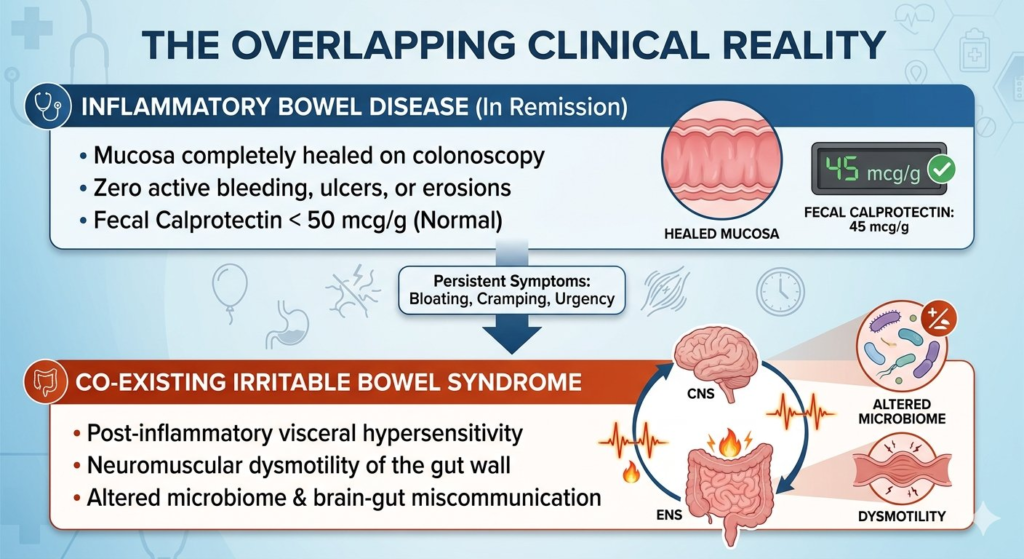
A significant number of patients with Ulcerative Colitis or Crohn’s Disease achieve what gastroenterologists term deep remission: their colonoscopies show healthy, healed pink mucosa, biopsies confirm no active inflammation, and their inflammatory markers return to normal. Yet, they continue to experience daily abdominal cramping, sudden gas, bloating, and erratic bowel movements.
This presentation is often referred to as IBS-like symptoms in IBD remission or post-inflammatory visceral hypersensitivity. The prior inflammation leaves the enteric nervous system sensitized.
Recognizing this overlap is essential: escalating expensive, powerful immunosuppressive medications or biologics will not resolve these symptoms, because there is no active inflammation left to treat. Instead, these symptoms respond best to the IBS therapies discussed above—such as the Low-FODMAP diet, gut-brain behavioral support, antispasmodics, and gentle neuromodulation.
9. Frequently Asked Questions (FAQs)
Can untreated IBS turn into IBD over time?
No. Irritable Bowel Syndrome cannot transform or evolve into Inflammatory Bowel Disease. They are separate physiological entities. IBS involves nervous system signaling, visceral hypersensitivity, and motility issues along the gut-brain axis; it lacks the autoimmune destructive mechanisms required to produce IBD.
If someone diagnosed with IBS is later diagnosed with Ulcerative Colitis or Crohn’s Disease, it almost always means the early, low-grade inflammatory changes of IBD were initially misattributed to IBS due to symptom overlap.
Does IBS increase the risk of developing colon cancer?
No. IBS causes no structural tissue injury, creates no chronic mucosal ulcerations, and does not alter cellular DNA in the bowel wall. Multiple clinical trials confirm that having IBS does not increase your statistical risk of developing colorectal cancer.
In contrast, patients with long-standing IBD (particularly those with Ulcerative Colitis or Crohn’s colitis affecting more than a third of the colon) face an elevated risk of dysplasia after 8 to 10 years of active disease, making regular surveillance colonoscopies with targeted biopsies an important part of care.
Can a simple blood test definitively tell the difference between IBS and IBD?
A basic blood test alone cannot provide a definitive diagnosis, but it offers valuable diagnostic clues. Blood tests can check for elevated systemic inflammatory markers (such as High-Sensitivity C-Reactive Protein [CRP] and Erythrocyte Sedimentation Rate [ESR]) and screen for iron-deficiency anemia, which are common in active IBD but absent in IBS.
However, the non-invasive gold standard for differentiating the two is the Fecal Calprotectin stool test, which measures gut-specific mucosal inflammation much more accurately than general blood markers.
Why do both conditions seem to get worse when I am stressed?
The brain and the digestive tract are linked through the gut-brain axis, communicating via the vagus nerve, neurotransmitters (over 90% of the body’s serotonin is produced in the gut), and the hypothalamic-pituitary-adrenal (HPA) stress axis.
- In IBS: Acute psychological stress prompts the central nervous system to send signals that alter gut motility and heighten pain sensitivity in the bowel wall.
- In IBD: Stress activates neuro-endocrine pathways that trigger systemic corticosteroid and cytokine fluctuations. This can compromise the intestinal barrier and trigger an inflammatory flare-up in an otherwise well-managed autoimmune condition.
10. Summary: Knowing Your Body and Seeking the Right Care
Navigating chronic gut symptoms can feel overwhelming, but you do not have to settle for guesswork. While Irritable Bowel Syndrome and Inflammatory Bowel Disease share broad symptom overlap, their underlying biology is entirely different:
- IBS is a disorder of gut-brain signaling and visceral hypersensitivity. The physical structure of the digestive tract remains intact, there is no tissue destruction, and symptoms are managed by regulating motility, adjusting diet, and calming gut-brain communication.
- IBD is an autoimmune inflammatory disease. It causes visible tissue destruction, deep ulcerations, and bleeding that can lead to systemic complications if left untreated. It requires early, objective medical intervention to achieve lasting mucosal healing.
If you struggle with persistent digestive issues—especially if you notice red-flag symptoms like nocturnal waking, visible blood, unintended weight loss, or persistent fever—step away from internet forums and self-medication.
Schedule an appointment with a qualified gastroenterologist. Through modern, non-invasive testing like fecal calprotectin alongside high-definition endoscopic evaluations, a specialist can identify the precise cause of your symptoms and build a personalized treatment plan to help you regain comfortable, reliable digestive health.